Choosing a Pool Finish: Mosaic, Ceramic, Stone or Liner
The right pool finish depends on how the pool is built and what you expect from it. For reinforced-concrete pools, ceramic or porcelain tile is the most balanced option; glass mosaic comes into its own on curved surfaces and where you want more depth in the water, while a liner is the finish for prefabricated pools and quick refurbishments. Natural stone is mostly used around the pool rather than inside it.
Which pools suit glass mosaic?
Glass mosaic is the finish that best suits pools with curved walls, rounded steps and freeform shapes. The small pieces follow any surface without being cut, and the glass refracts light, giving the water depth and sparkle. The price is far more grout per square metre: it takes longer to lay than ceramic, the result depends directly on workmanship and grout quality, and the upfront cost is higher. With so much grout, keeping the water balanced and brushing the surface regularly matter more with this finish.
Why are ceramic and porcelain so common?
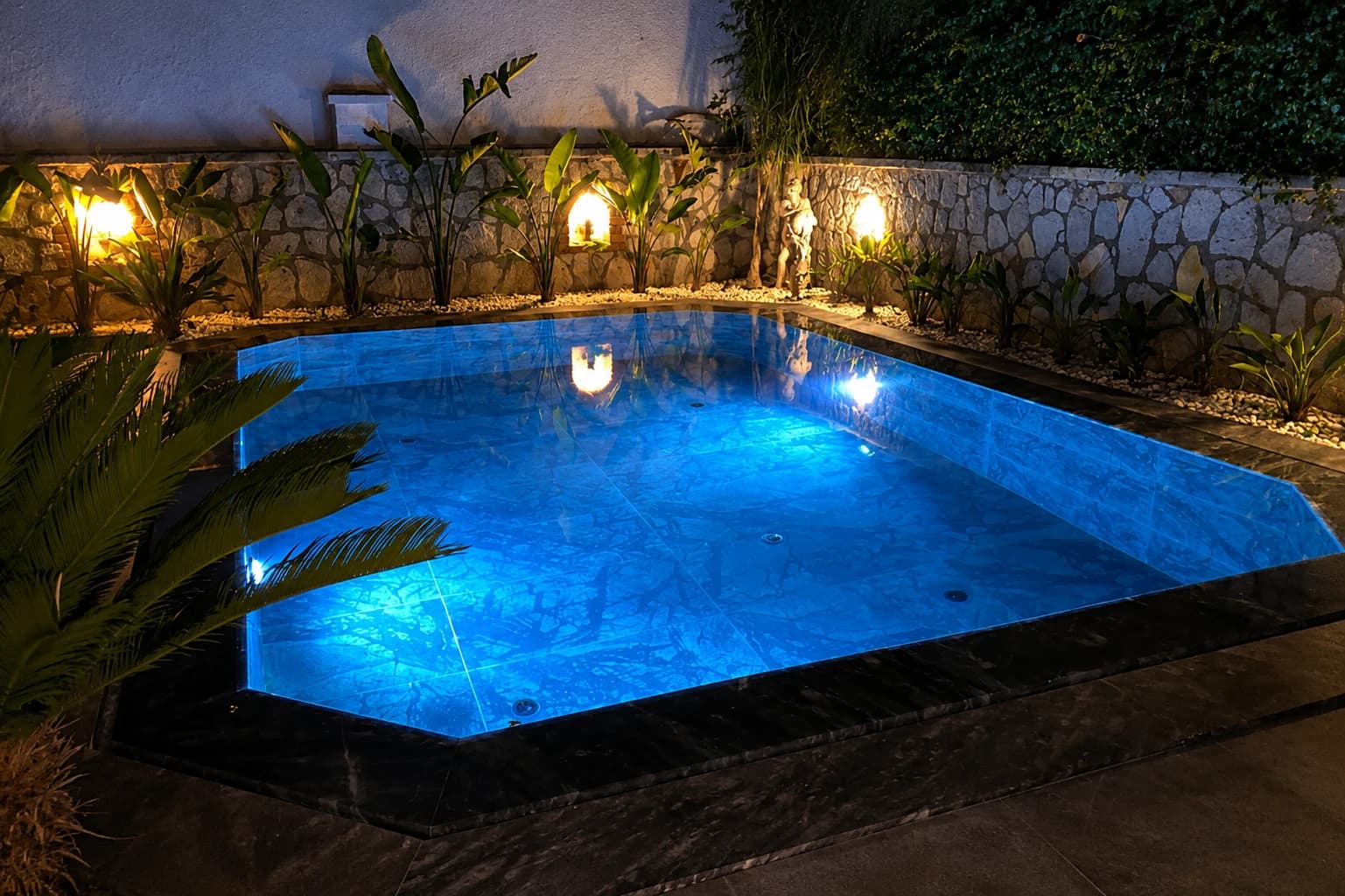
Ceramic and porcelain are common because they cover large areas quickly, leave few joints and are easy to look after. Tiles made for pools absorb very little water and are suited to permanent immersion; on steps and in shallow areas, anti-slip surfaces are chosen. Large-format tiles give flat surfaces a calm, continuous look, though they need cutting on curved walls. The colour of the tile also sets the colour of the water. In the anthracite-lit renovation in Çeşme, the interior of the 4×6 metre pool was finished in green-toned verde ceramic. In the hidden-weir renovation in Ilıca, the pool interior and the sun deck were laid in the same 33×66 verde porcelain so that they read as one surface.
Natural-stone coping: marble and travertine
Natural stone is used around the pool far more than inside it. The coping is the surface that meets the water most and is walked on barefoot most, so it must not be slippery when wet or get too hot in the sun. Travertine is a light-coloured stone that grips when wet, but it is porous and needs a sealer. Marble is denser and slippery when polished; at the pool edge it is used with a textured finish. In the Ilıca project, the Bursa black marble coping was treated to make it anti-slip. Dark stone heats up more in the sun than light stone, which is worth weighing when you choose a dark coping. You can see a light example, beige travertine coping, on the deck-level villa pool, and tundra grey marble on the tundra grey renovation.
What is a liner finish?
A liner is a PVC-based membrane that is either fitted inside the pool in one piece or welded together on site. It acts as both finish and waterproofing, and it has no grout lines. It is the standard finish for panel-type prefabricated pools, and reinforced versions are also used to refurbish concrete pools. It goes in quickly and costs less up front than ceramic or mosaic. Its weak point is surface durability: sharp objects and stiff brushes can damage it, and when it wears out it is replaced as a whole rather than patch by patch. Nor does it give the depth that ceramic or stone does.
The finishes at a glance
The main points for the four materials are summarised below. Because cost and time differences vary by project, they are given as a direction only.
| Finish | Strength | What to watch | Best suited to |
|---|---|---|---|
| Glass mosaic | Follows curves, adds depth to the water | More grout, longer to lay, higher upfront cost | Freeform concrete pools |
| Ceramic and porcelain | Quick to lay, few joints, easy upkeep | Needs cutting on curved surfaces | Straight-lined concrete pools |
| Natural stone | Natural look that ties in with the surroundings | Needs a textured finish for grip and a sealer if porous | Coping and surrounds |
| Liner | No grout, quick to fit, lower upfront cost | Vulnerable to sharp objects, replaced as a whole | Prefabricated pools and quick refurbishments |
In short: which one suits you
If you have a straight-lined concrete pool and want a balanced, low-maintenance result, ceramic or porcelain is the right choice. If you have a curved shape or want a surface where light looks richer in the water, glass mosaic repays the effort, but it asks for more labour and more care in upkeep. If you have a prefabricated pool or are planning a quick refurbishment, a liner comes into the picture. Choose the coping together with the interior finish, with colour and grip in mind. If your existing finish is worn, our article on renewing pool grout and tiles covers the repair side. At Seçkin Havuzculuk we settle the finish together with the design, around Çeşme, Alaçatı and İzmir; the process is described on our pool construction page.
Common questions.
What determines the colour of pool water?
The colour of the water is set mainly by the colour of the finish, the depth of the pool and the light. A light finish gives light blue water; dark and green tones deepen the water and strengthen the reflection of the surroundings. The same tile looks different at the shallow and deep ends, so the decision is best made by seeing a similar pool rather than a sample alone.
Which is more durable, glass mosaic or ceramic?
Both are made for pools and last a long time when laid properly. The difference is the amount of grout: mosaic has far more of it, so wear shows in the grout first, while ceramic has fewer joints and is easier to look after. Durability depends less on the tile than on the adhesive, the grout and the workmanship.
Can a liner be used on a concrete pool?
It can. Reinforced PVC membranes are used to refurbish concrete pools and provide waterproofing at the same time. The look and feel differ from ceramic, so speed and budget have to be weighed against the appearance you expect.